
Tile Floors Designed for Commercial Durability
Commercial Flooring Tiling in Grantham for retail spaces, restaurants, medical facilities, and high-traffic commercial environments
Commercial tile installations face challenges that residential projects never encounter—constant foot traffic, frequent wet cleaning, temperature fluctuations from HVAC cycling, and the structural movement that occurs in commercial buildings. Rampant Remodel & Tile LLC installs commercial tile systems in Grantham using materials and methods engineered for these conditions, where tile failure creates liability risks and forces expensive emergency repairs. The installation starts below the visible surface, with substrate preparation and membrane systems that prevent the cracking and delamination common in commercial settings.
The tile selection process considers more than aesthetics—slip resistance ratings, porosity classifications, and impact resistance determine whether a tile performs adequately in your specific environment. Restaurant kitchens require different tiles than retail showrooms, and medical facilities need surfaces that withstand chemical disinfectants without degrading. The setting materials and grout systems must match the tile's performance characteristics, creating a unified system rather than individual components that fail at different rates.
Arrange a consultation to review tile options appropriate for your facility's traffic patterns and maintenance requirements.
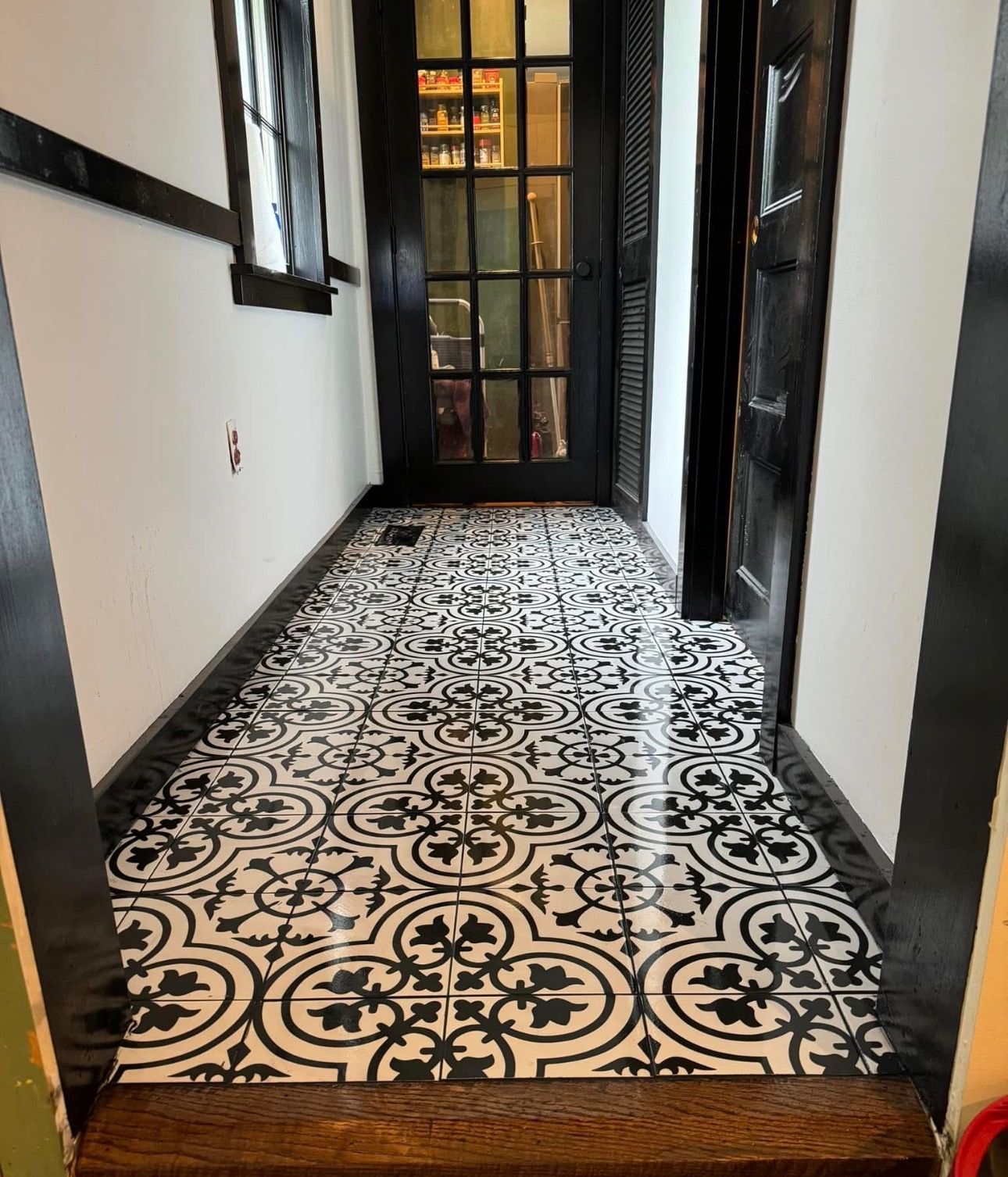
How Commercial Tile Installation Differs From Residential Work
Commercial installations use modified thinset mortars and epoxy grouts formulated to handle structural movement and cleaning chemical exposure that would break down standard residential materials. The substrate often requires crack isolation membranes or uncoupling systems that allow the building structure to move independently from the tile assembly, preventing stress cracks that telegraph through to the finished surface. Large format tiles common in commercial spaces demand perfectly flat substrates and specialized lippage control systems during installation.
After installation, you'll have a floor surface that maintains consistent appearance through daily commercial cleaning and resists the staining and wear patterns that develop in lower-grade installations. The grout joints remain intact rather than cracking or crumbling, and individual tiles stay bonded rather than developing the hollow spots that indicate adhesion failure. Properly installed commercial tile handles point loads from equipment, carts, and fixtures without cracking under stress concentration.
The installation timeline depends on substrate condition and required preparation—existing flooring removal, concrete repair, and moisture mitigation add time but prevent future failure. Understanding these factors upfront allows realistic scheduling that accounts for cure times and the phased approach often necessary to keep portions of your facility operational during construction.
Common Concerns About Commercial Tile Projects
Facility managers and business owners need specific information about performance, maintenance, and long-term durability before committing to tile installations.
What tile characteristics matter most in commercial applications?
Porcelain tiles rated for commercial traffic offer superior density and lower water absorption than ceramic options, while slip resistance coefficients indicate safety performance in wet areas—these specifications directly affect liability and longevity.
How long before a newly tiled commercial floor can handle full traffic?
Thinset mortar reaches handling strength within 24 hours, but full cure requiring seven days is necessary before subjecting the installation to heavy loads, rolling carts, or aggressive cleaning—premature loading causes bond failure that may not become visible for months.
Why do some commercial tile floors develop cracks while others remain intact?
Substrate movement from building settling, temperature changes, or inadequate expansion joints transfers stress into the tile assembly—crack isolation membranes and properly placed movement joints prevent this stress transfer in professionally installed systems.
What maintenance does commercial tile flooring require in Grantham?
Daily dust mopping and weekly damp mopping with neutral pH cleaners preserve both tile and grout, while periodic sealing of cement-based grouts prevents staining in high-traffic areas where dirt and moisture constantly contact the surface.
How does tile selection affect long-term maintenance costs?
Higher-grade porcelain tiles with through-body color hide wear better than surface-glazed options, and larger format tiles reduce grout joint length, which decreases the maintenance burden since grout requires more frequent attention than tile surfaces.
Rampant Remodel & Tile LLC evaluates substrate conditions and existing flooring before recommending tile systems, ensuring the installation method matches your facility's structural characteristics and operational demands. Contact our team to discuss project specifications and scheduling that minimizes disruption to your business operations.