Waterproof Systems That Prevent Long-Term Damage
Shower Tile Installation in Lebanon for custom wall tile, shower pans, niches, benches, and decorative details that combine function with design
Rampant Remodel & Tile LLC installs custom tile shower systems throughout the Upper Valley Region, building waterproof enclosures that protect homes from moisture damage while providing personalized design flexibility. The work involves modern waterproofing membranes that prevent water from penetrating walls and floors, shower pan construction or installation that directs water toward drains, wall tile layout in patterns ranging from simple stacked to complex designs, and grout application that seals joints while maintaining necessary flexibility. Material options include ceramic, porcelain, natural stone, and large-format tile, each offering different aesthetic qualities and maintenance requirements.
Waterproofing creates the invisible barrier that determines whether shower installations last decades or fail within years, which is why membranes get applied to walls and floors before any tile work begins. Proper slope in shower pans ensures water flows toward drains rather than pooling in corners where standing moisture eventually finds gaps in grout or caulk, and backer boards provide stable, moisture-resistant surfaces that won't deteriorate like drywall when exposed to steam and occasional water contact.
Schedule a consultation for custom shower tile installation to review design options and waterproofing approaches suited to your bathroom layout.
What Installation Techniques Protect Against Moisture Failure
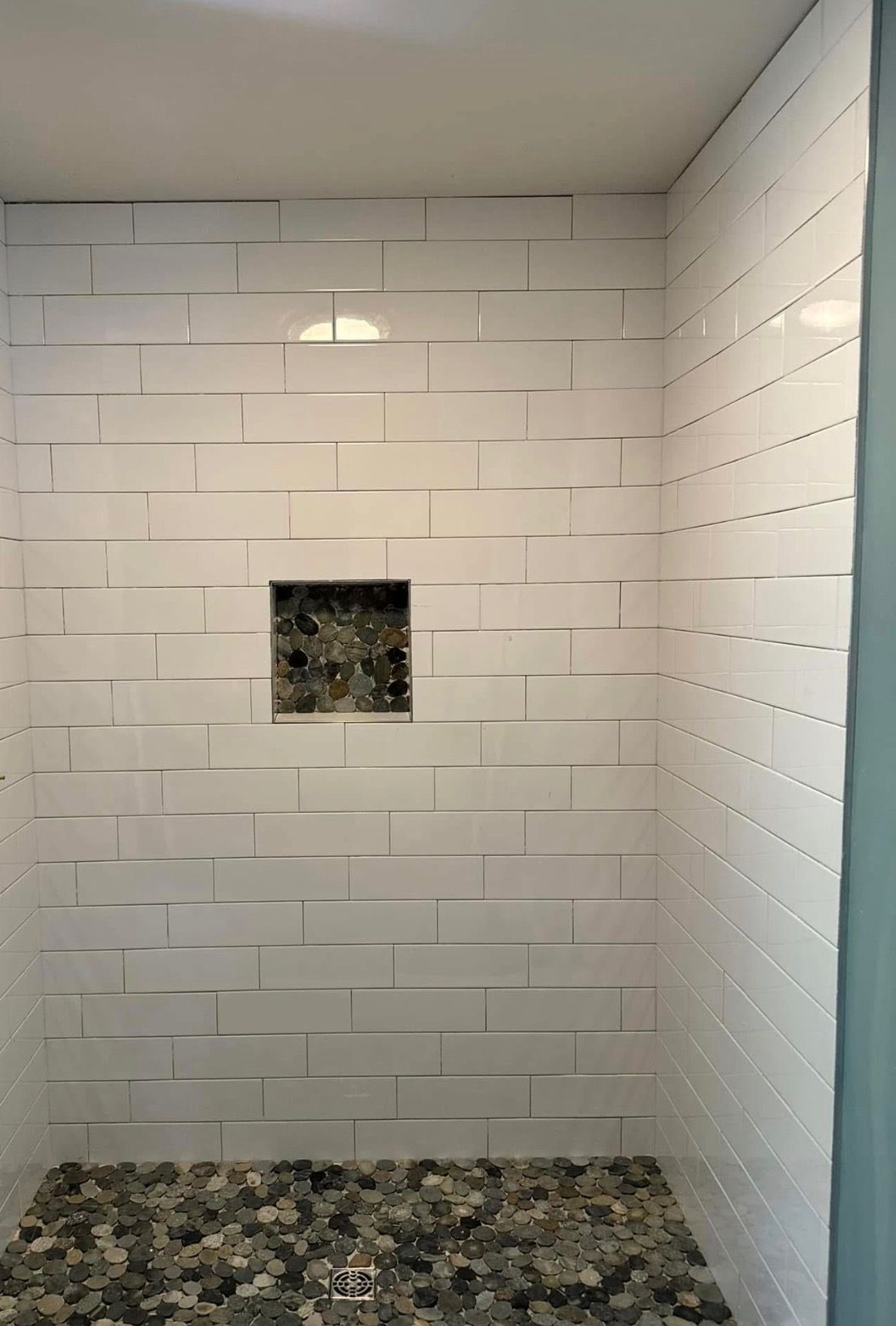
Shower tile installation requires layered waterproofing that addresses both direct water contact on surfaces and vapor penetration that occurs during every shower, which is why modern systems use sheet membranes or liquid-applied barriers that create continuous protection across walls, floors, corners, and penetrations. Niches, benches, and decorative borders add functionality and visual interest but require careful waterproofing at each transition point where water could find paths into wall cavities.
After installation, you'll notice tile walls with uniform grout lines that maintain consistent spacing even in corners and around fixtures, surfaces that shed water without allowing it to seep behind edges, and details like accent bands or decorative borders that integrate seamlessly into the overall pattern. Grout selection affects both appearance and maintenance—epoxy grout resists staining and moisture better than cement grout, though it costs more and requires faster installation before it becomes unworkable.
Large-format tile reduces grout line quantity, which minimizes maintenance and creates cleaner modern appearance, though it requires more precise substrate preparation and leveling to prevent lippage where tile edges don't align perfectly. Natural stone provides unique patterns and color variation but needs regular sealing to resist water absorption and staining, while porcelain and ceramic tile offer consistent appearance with minimal ongoing maintenance beyond routine cleaning.
Shower Tile Questions That Come Up Frequently
Custom shower installations involve material decisions, waterproofing requirements, and design considerations. These answers address practical concerns for homeowners in Lebanon planning bathroom updates.
What makes modern waterproofing systems different from older methods?
Sheet membranes and liquid-applied barriers create continuous waterproof layers that don't rely on grout or mortar to keep water out, unlike older installations where water eventually found paths through deteriorated grout into wall cavities that then required extensive repair.
How do niches and benches affect waterproofing complexity?
Each built-in feature creates additional corners, transitions, and penetrations that need careful membrane application and proper slope to drain water rather than trap it where it slowly damages surrounding materials.
When does natural stone make sense despite higher maintenance?
Stone offers color variation and natural patterns that manufactured tile cannot replicate, making it worth the sealing requirements for homeowners who prioritize unique appearance over minimal maintenance demands.
What tile sizes work best for shower walls in Lebanon bathrooms?
Large-format tiles reduce grout lines and create contemporary appearance, though smaller tiles provide better slip resistance on shower floors and allow more design flexibility in tight spaces or around angled walls.
How long before newly tiled showers can be used?
Most installations require 72 hours for mortar and grout to cure fully before water exposure, allowing materials to reach designed strength and waterproof performance that prevents premature failure from rushed timelines.
Shower tile installation integrates naturally with bathroom remodeling projects where coordinated fixtures, flooring, and finishes create complete room transformations. Rampant Remodel & Tile LLC combines tile work with related services throughout the Upper Valley Region, handling projects from simple shower updates to comprehensive bathroom renovations. Contact us to arrange a project consultation and review tile samples, layout options, and waterproofing systems appropriate for your specific installation.