
Structural Damage That Shows Before It Spreads
Exterior Rot Restoration in Upper Valley Region: NH and VT for homes with deteriorating wood trim, siding, and structural components
Rampant Remodel & Tile LLC performs exterior rot restoration across the Upper Valley Region: NH and VT, addressing wood deterioration before it compromises structural integrity or voids paint warranties. Fascia boards that separate from rooflines, soffits with visible water stains, and window trim soft enough to puncture with a screwdriver signal active rot that spreads beyond what surface inspection reveals. The freeze-thaw cycles common to New Hampshire and Vermont accelerate wood breakdown once moisture penetrates protective coatings, turning minor surface damage into replacement-level failures within a single season.
This service involves removing compromised wood from fascia, soffits, window trim, door trim, siding, corner boards, and other exterior components, then installing properly primed replacement materials that match existing profiles. The repair process identifies not just the visible damage but the moisture source driving the deterioration, whether from failed caulking, ice dam backup, gutter overflow, or ground splash redirected by settled landscaping. Addressing the water entry point before replacing rotted wood determines whether the repair lasts two years or twenty.
Schedule a property evaluation to identify wood deterioration and the moisture conditions causing it.
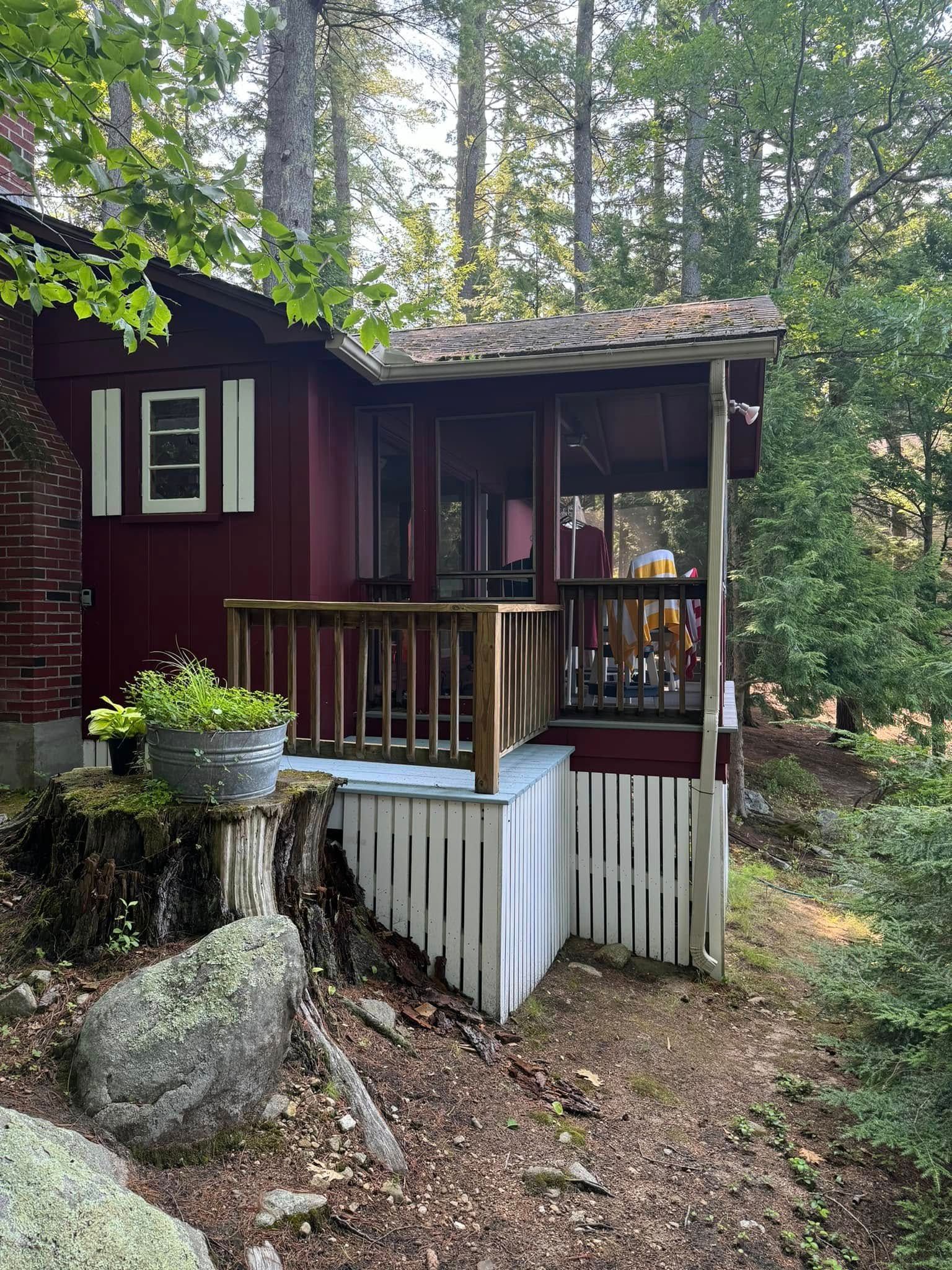
What Proper Rot Restoration Requires
The restoration begins with material assessment using moisture meters and probe tools to determine how far decay extends beyond what you see from the ground. Wood that appears solid from ten feet away often reveals punky fiber, checking cracks, and hidden fungal growth once you test resistance with hand pressure or probe penetration. The boundary between salvageable and compromised material dictates whether sections receive localized dutchman repairs or full board replacement, a decision that affects both structural performance and how the repair telegraphs through subsequent paint coats.
After Rampant Remodel & Tile LLC completes the work, you notice trim that sits flush against siding without gaps, corners that meet in clean lines without separation, and fascia boards that remain rigid when gutters fill with water or snow load transfers from the roof edge. Paint applied over properly restored substrate bonds to stable wood fiber instead of delaminating within the first winter, and caulk joints compress against solid backing rather than sinking into voids as hidden rot continues. The difference shows up most clearly during the second year, when properly restored sections maintain their profile while untreated areas develop new soft spots and paint blistering.
Rot restoration necessarily precedes exterior painting when preparing surfaces for coatings that carry multi-year performance expectations, since paint systems applied over compromised wood fail regardless of product quality or application technique. Repairs also address flashing integration at window heads and door thresholds, primer back-priming on replacement boards before installation, and fastener placement that avoids creating new moisture pathways. The scope frequently expands once siding removal reveals sheathing damage or framing contact with saturated materials.
Questions Before Starting Your Project
Exterior rot typically appears in transition zones where different materials meet or where water concentrates during weather events, making early detection important before damage reaches structural framing.
What causes exterior wood rot in the Upper Valley Region: NH and VT climate?
Seasonal freeze-thaw cycles drive moisture into wood grain through checking cracks and failed paint, then expansion during freezing ruptures cell structure and creates pathways for fungal growth that continues during humid summer months.
How do you determine whether wood needs repair or replacement?
A probe test measures resistance depth—if the tool penetrates more than one-quarter inch with hand pressure, or if wood compresses rather than splinters, the material has lost structural integrity and requires replacement rather than surface repair.
What happens to surfaces after rot restoration is complete?
Replacement boards sit level with existing siding profiles, joints close without gaps that collect water, and primer penetrates into solid wood fiber rather than sealing over spongy material that continues deteriorating beneath the coating.
When should rot restoration happen relative to exterior painting?
Repairs must finish before paint application begins, since coating systems require cured primer on all replaced wood and fully sealed joints where new materials meet existing substrates to prevent moisture infiltration at transition points.
What preparation do replacement boards receive before installation?
All replacement wood gets back-primed on surfaces that will become inaccessible after installation, end-grain sealed to prevent wicking, and fit-tested to confirm flush alignment before fastening, steps that prevent the premature failure patterns common to field-cut lumber installed without moisture barriers.
Rampant Remodel & Tile LLC addresses both the damaged materials and the conditions that caused deterioration, an approach that protects your investment when combined with properly timed exterior painting. Arrange an on-site consultation to assess current wood condition and develop a restoration plan before the next freeze cycle.